

The Reasoning Trap: Why AI Can’t Think Like Humans Think.
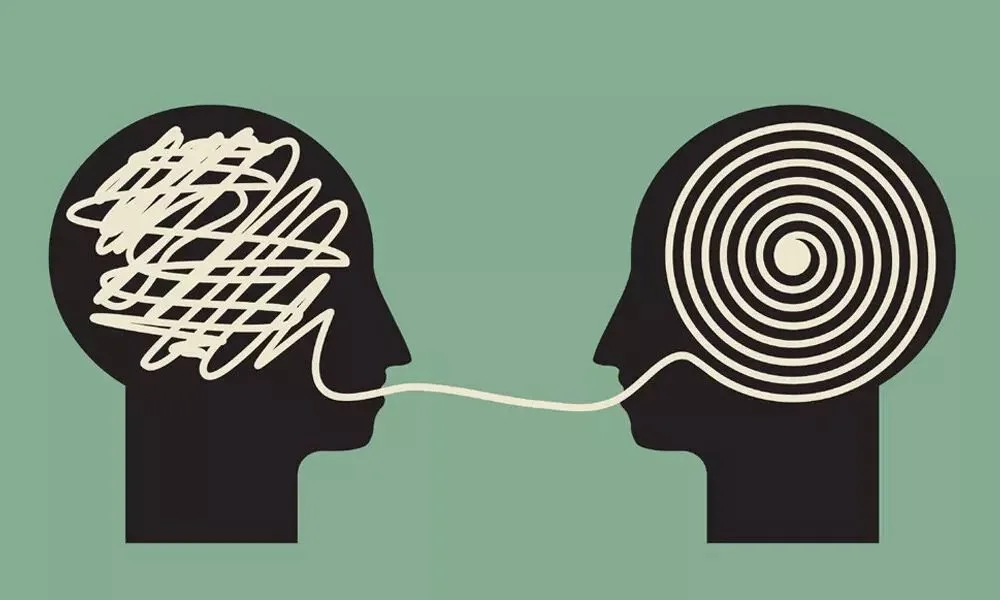
What we lose when artificial intelligence learns only one way to reason.
The Hidden Assumption
We assume human reasoning is universal. That logic follows the same patterns everywhere. That the way we connect cause and effect, weigh evidence, and reach conclusions is simply “how thinking works.”
But what if that’s wrong?
What if the way AI systems learn to reason – the patterns they pick up from training data – represents just one slice of human cognitive diversity? And what if this limitation is hiding the most profound barrier to truly intelligent machines?
How Different Cultures Actually Think
Consider how different languages encode certainty and evidence:
- In Turkish, you can’t make a statement without indicating how you know it – whether you witnessed it directly, heard it from someone else, or are making an inference. The language forces precision about the source and reliability of information.
- In Japanese, reasoning often moves in spirals rather than straight lines, building context and relationships before arriving at conclusions. Direct confrontation of ideas is avoided in favor of harmony and collective understanding.
- Many indigenous languages embed environmental relationships directly into their logical structures – you can’t talk about an animal without referencing its relationship to seasons, weather, and other species.
These aren't just different ways of expressing the same thoughts. They're fundamentally different ways of organizing reasoning itself.
The Western Logic Monopoly
But AI systems learn to reason primarily from English text, which carries specific assumptions about logic inherited from Greek and European philosophical traditions:
- Linear, step-by-step argumentation
- Binary true/false evaluations
- Individual agency and causation
- Separation of observer from observed
- Hierarchical categorization of concepts
When AI encounters other reasoning patterns, it doesn’t learn them as valid alternatives. It tries to fit them into familiar English-shaped frameworks, often losing what makes them powerful.
We're training AI to think like 18th-century European philosophers, then wondering why it struggles with human complexity.
The Invisible Ceiling
This creates a subtle but profound limitation. AI systems can process information faster than humans and store vastly more facts, but they’re reasoning about all that information using only one cultural approach to logic.
Imagine a super-intelligent system that can analyze millions of medical studies but can only understand illness through Western biomedical frameworks – missing traditional diagnostic approaches that have proven effective for thousands of years.
Or AI that can process every business dataset but can only think about success and failure through individualistic, short-term metrics – unable to understand collective value creation or long-term cyclical thinking.
The reasoning trap isn't that AI thinks wrong—it's that AI thinks in only one way.
Beyond Translation: The Synthesis Problem
This goes deeper than language translation. Even when AI correctly translates concepts between languages, it often misses how different cultures connect ideas together.
Eastern philosophies that embrace paradox and contradiction as sources of insight get flattened into binary logical structures. Indigenous holistic thinking gets fragmented into separate analytical categories. Collective reasoning processes get individualized.
The result? AI that can access knowledge from different cultures but can’t truly think with different cultural frameworks.
The Innovation Bottleneck
This reasoning limitation might be the real barrier to Artificial General Intelligence (AGI).
True AGI would need to synthesize knowledge and solve problems using the full spectrum of human cognitive approaches – not just the ones that happen to be encoded in English text.
What breakthroughs might emerge if AI could:
- Reason with Japanese spiral logic for complex relational problems
- Apply Turkish evidence-weighting for information reliability
- Use indigenous systems thinking for environmental challenges
- Combine Eastern paradoxical thinking with Western analytical precision
What if the path to AGI isn't just more data or compute, but more diverse ways of reasoning?
The Questions We Should Be Asking
If human reasoning is culturally diverse, and AI reasoning is culturally narrow, what does this mean for the future of artificial intelligence?
Can AI ever truly understand humans if it can only think like one subset of humans?
What would multimodal reasoning look like in artificial systems?
Are we building cognitive ceilings into our most advanced AI because we're training them on cognitively limited datasets?
What would happen if AI could learn to reason the way different cultures actually think?
The Deeper Challenge
This isn’t just about making AI work better in different languages. It’s about whether artificial intelligence can ever transcend the cognitive limitations of its training data.
The reasoning trap suggests that truly intelligent AI might need to be built from the ground up to think in multiple cultural paradigms – not just translate between them.
But how would you even begin to approach such a challenge?
What would training data look like if it preserved different reasoning patterns rather than flattening them?
Is it possible to build AI that thinks multiculturally, or are we forever limited by the cognitive frameworks we start with?
Your Perspective?
Every culture has developed sophisticated ways of reasoning about the world. Every language
encodes different approaches to logic, evidence, and truth.
Yet our most advanced AI systems learn to think in essentially one way.
Is this the most overlooked limitation in artificial intelligence?
What would genuinely multicultural reasoning look like in AI systems?
Are we ready to build AI that thinks more like humanity actually thinks?
Priya M Nair and Nipuna Abeykoon are the founders of ZWAG and creators of Mātṛ UIM. These blogs are part of their research exploring the intersection of language, culture, cognition and future of intelligence – both artificial and human.